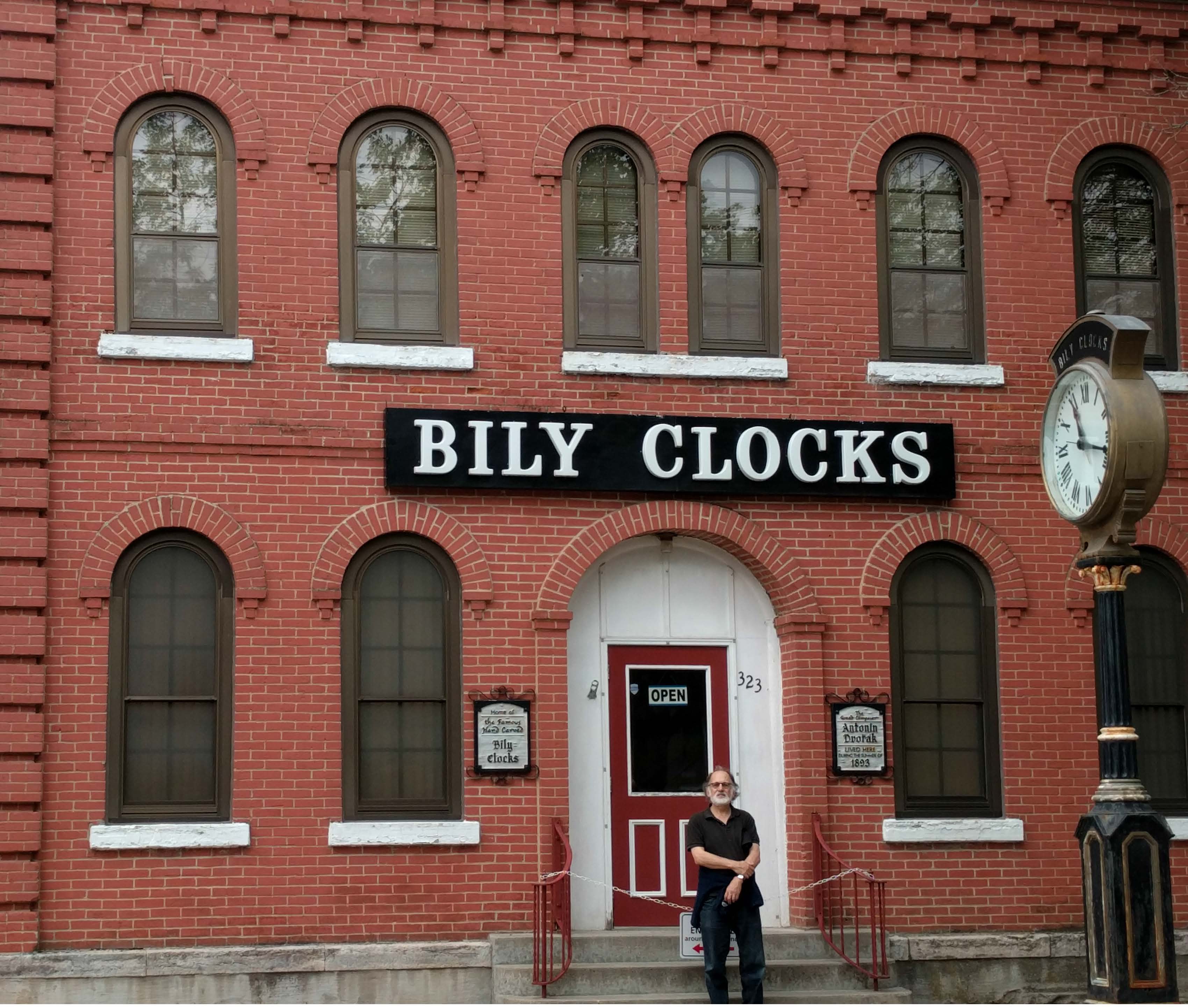
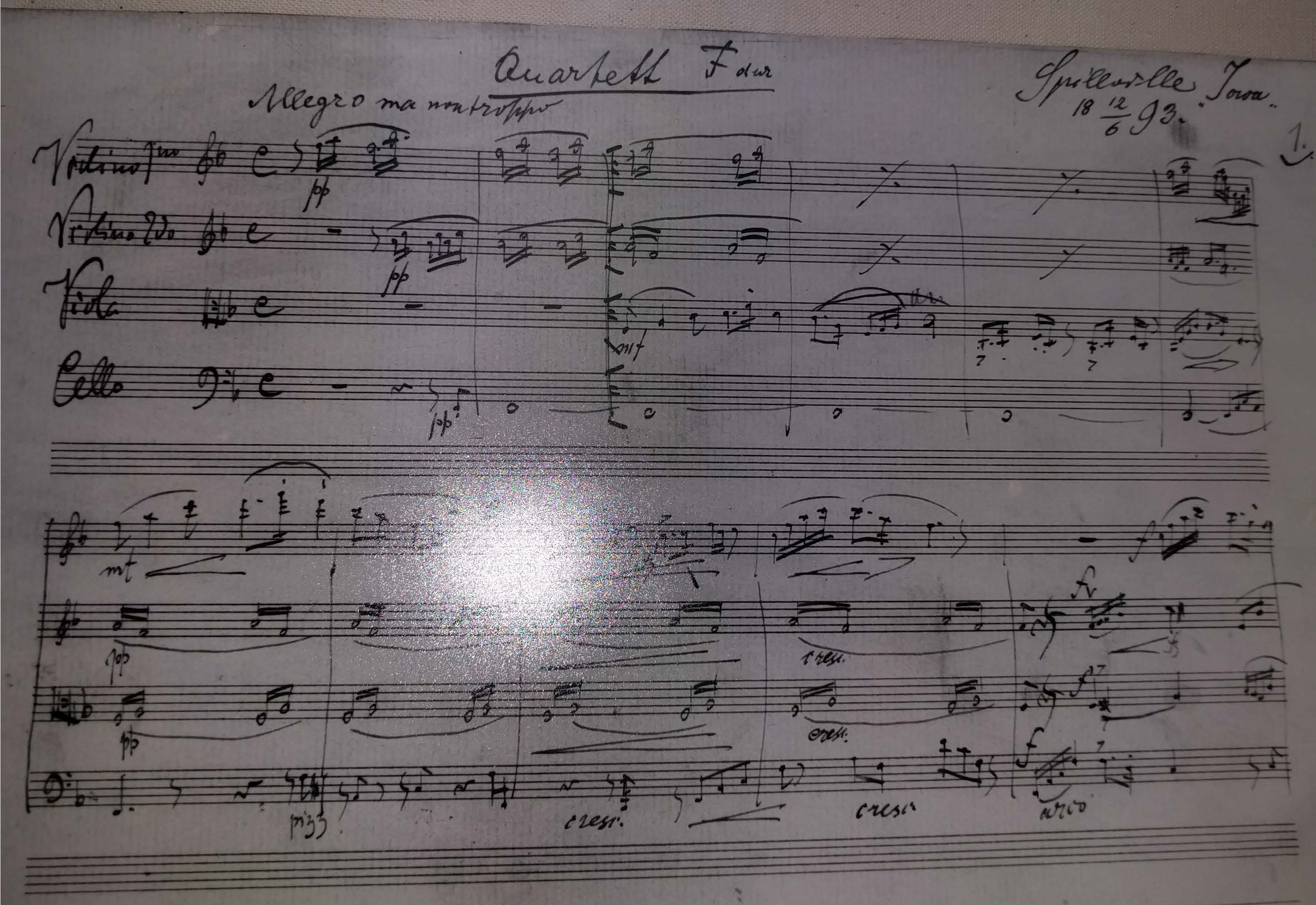
In the last few days I have completed a half-hour-long 2-piano work called STORIES FROM THE 7TH WARD, a tribute to New Orleans. My friend Althea Waites, a member of the Orpheus Duo for which the set is written, and a native of New Orleans who grew up in the 7th Ward, was the catalyst for this suite. Hearing stories told to her by her grandmother, hearing about her mother and about her sister’s dream vision of her, and hearing Althea’s playing of pieces like Margaret Bonds’ “Troubled Water,” were the main sources of inspiration. Along with these, I was influenced by the music of my late distant relative, Tony Almerico, who was a prominent New Orleans Dixieland trumpeter, bandleader, broadcaster and educator, known for his Parisian Room All-Stars and collaborations with Pete Fountain. “Clambake on Bourbon Street” was probably his most successful recording.
Here are the titles of the four movements of the suite with brief summaries of the stories associated with them.
I – The Valiant Crab
This piece is a scherzo similar to those of Chopin. Althea’s grandmother told of a crab who, along with many other crabs, got dredged up onto a boat deck and put into a barrel destined for a New Orleans restaurant. Unlike the other crabs, he was determined to get out and back to sea. He would struggle upward in the barrel, but for some reason the other crabs would pull him back down. Each time he got a little further toward the top, but it took five attempts before he successfully freed himself and returned to his aquatic environment. The outer sections of the piece depict the crabs being harvested from the water, scraping and clacking around on deck and in the barrel, and the valiant crab making his repeated escape attempts. The “trio” section contrasts this with “underwater music” that suggests a graceful “crab ballet.” In addition to these elements, I also included a “cantus firmus” passage in the trio section, expressly for Althea’s Duo partner Mark Uranker, who happens to come from my hometown of Cuyahoga Falls, Ohio, and [therefore?] is a devotee [like me] of the intensely contrapuntal composer/pianist Ferruccio Busoni.
II – Taffeta Skirts
In 2008 my piece “Crying for Justice” was performed several times by the Pacific Symphony. The score calls for various Native American percussion instruments, including corn husk rattles (which I fabricated myself). Althea was present for one of the concerts, and afterward said that the sound of the rattles scared the living daylights out of her. She explained that the menacing tremolo was identical to the flailing of taffeta skirts worn by an apparition that she had witnessed as a child. The ghost appeared when Althea went alone into the kitchen. As she recounts, “When I saw the spirit, I screamed and ran to the living room, and after asking my grandmother why the spirit’s skirts were swishing back and forth, she said that this was one of our departed [Creole] relatives who was struggling to resolve conflicts that she experienced when she was alive. I spent the rest of the day being frightened, and my mom gave me hot tea when it was bedtime to calm me down.” The piece is really a scena that begins with brooding, disgruntled, dolorous material. A playful motif then enters, reminiscent of a tune Althea and her sister sang as girls. The encounter with the phantom is represented in a dynamic and disturbing episode, after which a calming lullaby theme takes hold. The corn husk rattles are employed by one of the players throughout, with a final receding shake at the end.
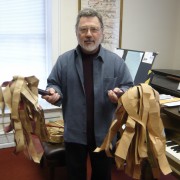 Here I am with a pair of my corn husk rattles.
III – Parisian Room Waltz
Tony Almerico ran a Dixieland club on the corner of Rue Royale and Canal Street called the Parisian Room. Trumpeter, bandleader, jazz educator, and record producer, he also hosted national live broadcasts from this site for 15 years. This piece is a tribute to Tony, and is clandestinely based on a tone row derived from one of his solos on “That’s a Plenty” from the album “Clambake on Bourbon Street.” (You’d never know this is tone row music, as the series is deployed to form a progression of three chords that support the lilting tune: C 7/#11/13, E Major 7 over B, and G 7/#11.) The B section is marked “siciliano,” nodding to the Almerico (and Cacioppo) Trinacrian heritage. The C section alludes to those traditional New Orleans funeral processions in which the bands are followed by second line folks twirling umbrellas and shaking their hips. (This piece is also available in a solo piano version.)
IV – Saints Alive! (aka Clara’s Vision)
Althea tells of a dream that her sister Clara had after their mother passed away. In the vision, Mama came to Clara to let the two know that she was OK and not to worry about her, that she was up there in heaven telling God how to run things more responsibly on earth. The piece winds up being a sort of rondo, with the thematic areas arranged in an ABACBDA sequence. A favorite song of Althea’s mom (along with “Roses of Picardy” as sung by Mario Lanza) was “When the Saints Go Marching In” (as done by Louis Armstrong). This provides the basic material for No. IV, although neither tune is ever stated outright. The A sections march along brightly in C Major, then modulate and dance jovially. In the B section, Althea’s mom goes up and tells God about all the troubles on planet earth, that he mustn’t be an absentee father and needs to look down and straighten things out. He then answers, and genuflects, blessing all the races, showering them with gifts of harmony. The brusque C area chips at motivic material. D, to balance out the “saintly” music, presents a “voodoo” theme with incisive accents over an ostinato. All is in a spirit of celebration. Another piece that Mama enjoyed was “Für Elise,” which she would hear her daughter Althea practice at home. A figuration from the beloved Beethoven example is used transitionally to set off the second occurrence of A, and in the coda. And somewhere along the way, the listener may wonder if, in addition to God, Mama Clara once within the pearly gates ran into Thelonious Monk (though they perhaps be One and the Same!).
For those who requested copies, I am posting below the typescripts of the two talks that I gave in Bari, Italy Oct. 7 & 8 for the festival and conference on Louis W. Ballard and the Music of the Southwest at the Piccinni Conservatory, in both Italian and English. Contact me through this site if you would like detailed citations for the musical examples referred to.
Tradizioni amerindiane del Sudovest e la musica di Curt Cacioppo
Amici in Italia mi hanno detto a volte: “In Europa, abbiamo la storia; in America, avete la natura.” Spesso credono che prima di Colombo, il nostro continente è stata una delle foreste vergini, vaste pianure, laghi e cascate primordiali, maestosi canyon e montagne, un vero Eden dove i cervi e gli antilopi giocarono, e la scoraggiante parola di uomo è stato raramente sentita, se mai. L’equivoco è comprensibile, dato il tipo di insegnamento difettoso che ancora prevale. Anche in America stessa, è poco noto che il continente al tempo di Colombo è stato abbondantemente popolata da diverse tribù di nativi, la cui presenza ha raggiunto a centinaia se non migliaia di anni. Nella regione nordest, per Nuova Inghilterra e la Pennsylvania, abbiamo reperti che risalgono a 13 mila anni. Solo 6 settimane fa un ragazzo di nuoto al largo di Long Beach, New Jersey alla costa orientale era colpito di una punta di freccia negli ondi, che egli riesce a prendere e chiedere alle autorità di verificare – è stata identificata come americana autoctona tra 8 mila e 10 mila anni fa. In Mesoamerica abbiamo la prova di culture che si sono sviluppate con l’addomesticamento del mais 5000 anni fa. Nel sud-ovest troviamo la prova multistratificata di città concatenate, ciascuna con una costellazione di comunità satellitari più di 1000 anni anziane, che dimostrano una società altamente evoluta e scientificamente compiuta. Resti umani sono stati datati a 16000 anni e più. In realtà, si trattava di un gesuita nel 1500 che per primo ha ipotizzato che le popolazioni avrebbero potuto migrate verso le Americhe da Eurasia, lungo lo Stretto di Bering, che la teoria moderna dice era passabile 13 mila a 16,500 anni fa. Molto più recentemente, alla fine dello scorso millennio, gli archeologi hanno scoperto ossa di mammut nel Yukon scheggiato da strumenti umani da 28 mila anni fa. Questo si allinea con i principi di alcuni custodi di saggezza dei nativi americani oggi che l’emergere delle popolazioni indigene si è verificato alcuni 30 mila anni nel passato. Sembrerebbe che la scienza e la fede tradizionale tribale confermano l’una l’altra. Per essere sicuri, al momento di Colombo la popolazione europea era di 80 milioni. Forse un modo per apprezzare quanto simile robusto il numero di abitanti indigeni del Nuovo Mondo sono stati contemporaneamente sarebbe quello di riconoscere ciò che gli studiosi del genocidio professano, che entro la fine del secolo, dopo l’arrivo di Colombo nelle isole dei Caraibi, 80 milioni di vittime indigeni erano morti come il risultato diretto della mentalità conquista, armi e malattia che aveva portato.
Come un compositore nato a Ravenna, Ohio, io devo divaricare le gambe tra il Vecchio Mondo e il Nuovo. Sono orgoglioso di essere da una città di immigrati italiani che hanno nomato la loro comunità dopo la città adriatica gloriosa che vanta monumenti come San Vitale e Sant’ Apollonare in Classe, e il luogo di riposo eterno di Dante. Sono anche in sintonia con le risonanze della parola indiana che dà il nome a uno dei grandi e bei fiumi d’America, l’ Ohio, che articola il confine dello Stato in cui la nostra Ravenna si trova. Questa regione, che a mio parere produce ancora il mais più delizioso del paese, ha una sua ricca storia indigena, come sede del leggendario condottiero Tecumseh e la Confederazione Shawnee che ha fondato nel 1700, nonché alla cultura Adena e la sua costruzione monumentale tumulo che risale al 1000 aC. La mia passione per la storia dei nativi e` cresciuta con il tempo, abbracciando le tradizioni culturali degli Indiani d’oggi in tutta l’America, e suscitando simpatia attivista al sostegno delle loro lotte in corso. Inevitabilmente questi aspetti entrano nella mia musica.
Ho scritto in prossimità di 30 pezzi ispirati da affinità native. Alcuni sono 2 minuti di lunghezza, altri più vicino al 40, in totale vicino a 5 ore di musica, forse un terzo della mia produzione. Il tema è costante, sia nel mio lavoro creativo, e nella mia vita – certamente nella mia vita come insegnante. Prendo il resto del tempo per parlare di 3 esempi – i due pezzi sul festival, le Visioni lyriche e la Danza dei Serpenti, e poi il mio più consistente contributo in questo senso, un ciclo di quattro quartetti d’archi entitolato Grembo delle Montagne sacre.
Visioni liriche dalla tribù Pawnee
Le Visioni liriche offrono all’ascoltatore un assaggio di spiritualità dei nativi americani. In ogni pezzo il pianoforte risuona di un autentica, spesso arcaica melodia indiana Pawnee. I Pawnee sono una tribù alle grandi pianure centrali, situata vicino alla zona da dove è venuto Louis Ballard. Le melodie sono stati raccolte e conservate nei primi anni del 1900 da parte dell’etnografo Frances Densmore dall’ istituto Smithsonian. Il primo dei 5 pezzi, un lamento, esprime il dolore di una donna che è stata colpita da un’arma da fuoco, e vaga senza meta fino a quando lei soccombe alla morte. E ‘una micro-immagine della sofferenza vasta delle nazioni indiane. Il secondo pezzo si occupa anche di perdita. Un uomo sta sognando delle voci di sua moglie e la figlia che sono perite. La figlia disorientata è alla ricerca di sua madre. Il 3° pezzo, Veglia di Notte, evoca una cerimonia in cui gli uomini stanno tracciando l’ascesa della stella del mattino. Ghost Dance – danza spettrale – allude alla campagna religiosa degli anni 90 del ottocento che profetizzavano un messia indiano che avrebbe liberato il continente dell’uomo bianco e riportare gli indiani morti e il bizonte. L’ultimo pezzo è una variazione sul Lamento. Lo spirito disincarnato galleggia sopra l’armonia, alla deriva verso l’alto. Ci sono 3 finali possibili – l’esecutore sceglie.
Snake Dance (Coyóhim katcina)
Il mio trio per flauto, violoncello e pianoforte Danza dei serpenti allude alla cerimonia elaborata del popolo Hopi dell’ arido sud-ovest, che agisce in ultima analisi, come una preghiera per la pioggia. Il serpente è un messaggero agli inferi, un intercessore alle divinità. Sacerdoti dell’ ordine serpente si riuniscono serpenti velenosi e nel kiva cantano su di loro, persuaderli a calmare e ricettività di supplica. Poi ballano con i serpenti sui bracci e sulle spalle, e in bocca, infine rilasciandoli di nuovo nel paesaggio di portare le petizioni del popolo ai loro dèi. Tra le altre cose, ho cercato di catturare una qualità di stenosi che disciplina le attività della Società Serpente, e altrove la qualità di scioltezza e di asimmetria che sento nella musica dei nativi. In questo caso, il flam della raganella di zucca sentito soprattutto nel sud-ovest, mi ha incuriosito. Ho immaginato di essere all’interno del guscio di osservare la pluralità di attacchi che le palline o semi secchi rendono contro la parete interna in uno scrollo singolo. Questo ha dato origine alle poliritmie nel pezzo.
Grembo delle Montagne sacre
La mia vita è cambiata quando David McAllester, che sarebbe diventare il mio mentore, è venuto a Harvard e ha presentato il suo film della Cerimonia Navajo Blessingway – via o canto di benedizione – a un gruppo selezionato di spettatori invitati. McAllester era un protege dell’ antropologo eminente Margaret Mead. David era uno dei fondatori del campo di etnomusicologia, e notevolmente ben informato della musica Navajo e la religione. Sapevo dopo di quella sessione che diventerei un giorno allievo del Diné. Da allora, ho collaborato con un sambuco e guida spirituale alla riserva, del nome Co’ií, di preservare la musica di un’ altra cerimonia di guarigione, la Coyoteway – via o canto del coyote -, e molto a suo incoraggiamento ho prodotto un ciclo di quattro quartetti d’archi che ripercorrono la storia della creazione del suo popolo. Il risultato è un racconto di due ore dal titolo Grembo delle Montagne sacre. Quattro montagne sacre che circondano il punto quattro angoli in cui le linee degli stati di Colorado, New Mexico, Arizona e Utah si incontrano per delineare il confine di Navajoland, o Dinétah. Si tratta di un’area di dimensioni paragonabili allo stato del Maine o il paese di Austria. I Navajo ritengono che all’interno di questo perimetro si è verificato la loro comparsa. I misteriosi esseri santi guidati da Dio che Parla provenivano dalle montagne e crearono il primo uomo e la prima donna; la divinità suprema Donna che si Cambia creo` i diversi clan; e una civiltà matrilineare evoise che poneva la massima priorità a vivere in equilibrio e armonia con la natura. Una ricca vita cerimoniale sviluppo` per promuovere la salute personale e comunitaria e l’ideale di raggiungere la condizione di hozhǫ, uno stato di perenne felicità fisica e spirituale. La mia quadriga di quartetti ripercorre questi episodi attraverso la vittoria di Monsterslayer – Uccisore di Mostri, figlio di Donna che si Cambia — su Yeitso ed altri esseri malvagi che minacciano l’esistenza umana. Il terzo dei quartetti è dedicata a Donna che si Cambia se stessa, e vorrei invitarvi udire un estratto da esso. Tra le altre cose, Donna che si Cambia incarna le quattro stagioni e il loro ritorno sempiterno. Voglio condividere con voi il tempo intitolato l’inverno. Questo rappresenta i mesi freddi sulla riserva – è tutto con sordini, e quasi tutta la scrittura si accalca sopra il do centrale. È astrattamente derivato da una canzone per la macinazione di mais, il tipo che ha originato alla cerimonia di maggiore eta` di Donna che si Cambia. Quiete prevale, momenti di impulso caldo del sole attraversano, e a un certo punto vengono suggeriti i suoni del tamburo dell’ acqua e incantesimo rituale. Questo è il quarto di 9 tempi collegati che compongono il lavoro. È una ninna-nanna a tutte le creature in letargo. ♪
Per concludere, lasciaremo di avere l’ultima parola gli indiani. Questa è, infatti, la canzone per la macinazione di mais a cui ho fatto riferimento, che ha influenzato la musica che abbiamo appena ascoltato. La canzone è stata cantata da una donna Navajo identificata come Julia Deal a una riunione pan-indiana ad Albuquerque negli anni ‘50. L’etnografo rendendo questa registrazione è stato Willard Rhodes, comunque, c’è una registrazione alternativa che è stata fatta simultaneamente da John Donald Robb, che esiste nell’archivio che porta il suo nome, presso l’Università del New Mexico li`. Stimo questa canzone come un capolavoro del Nuovo Mondo, veramente americano, americano nativo. Mi rallegro in essa, come faccio con la consapevolezza che l’olocausto di cui ho parlato prima, che mira a sradicare e le tradizioni e le persone che rappresenta, non è riuscito pienamente, e che i nativi americani, in gran parte a causa delle loro pratiche artistiche, continuano a sfidare le probabilità contro di loro. Ascoltiamo. ♪
Southwestern Amerindian traditions and the music of Curt Cacioppo
Friends in Italy have sometimes said to me, “In Europe, we have history; in America, you have nature.” People often believe that prior to Columbus, our continent was one of virgin forests, vast plains, primordial lakes and waterfalls, majestic canyons and mountain ranges, a veritable Eden where the deer and the antelope played, and the discouraging word of Man was seldom heard, if ever. The misconception is understandable, given the kind of faulty teaching that still prevails. Even in America herself, it is little known that the continent at the time of Columbus was abundantly populated by diverse Native tribes whose presence reached back hundreds if not thousands of years. On the east coast, in New England and in Pennsylvania, we have artifacts that date back 13,000 years. Just six weeks ago a boy swimming off of Long Beach, NJ had an arrowhead wash up against him, which he managed to grab and ask authorities to test – it was identified as native American from between 8,000 and 10,000 years ago. In Mesoamerica we have proof of cultures that developed with the domestication of corn 5000 years ago. In the Southwest we find multilayered evidence of chains of cities each with a constellation of satellite communities more than 1000 years old that demonstrate a highly evolved and scientifically accomplished society. Human remains have been dated at 16,000 years and more. In fact, it was a Jesuit in the 1500’s who first postulated that populations could have migrated to the Americas from Eurasia along the Bering Strait, which modern theory says was passable from 13,000 to 16,500 years ago. Much more recently, at the end of the last millennium, archeologists discovered mammoth bones in the Yukon chipped by human tools from 28,000 years ago. This aligns with the tenets of certain Native American wisdom keepers today that the emergence of indigenous populations occurred some 30,000 years in the past. It would seem that science and traditional tribal belief corroborate one another. To be sure, at the time of Columbus the population of Europe was 80 million. Perhaps one way to appreciate how similarly robust the numbers of indigenous inhabitants in the New World were contemporaneously would be to acknowledge what genocide scholars profess, that by the end of the century after Columbus’s arrival in the Caribbean Islands, 80 million indigenous victims had perished as the direct result of the conquest mentality, weaponry and disease that he had brought.
As a composer born in Ravenna, Ohio, I straddle the Old World and the New. I am proud to be from a town of Italian immigrants who named their community after the glorious Adriatic city that boasts monuments such as San Vitale and Sant’ Apollonare in Classe, and the eternal resting place of Dante. I am also attuned to the resonances of the Indian word that gives name to one of America’s great and beautiful rivers, the Ohio, which articulates the boundary of the state in which our Ravenna is situated. This region, which in my opinion still produces the most delectable corn in the country, has its own rich, indigenous history, as home to the legendary leader Tecumseh and the Shawnee Confederacy that he founded in the 1700’s, as well as to the Adena mound builder culture that dates back to 1000 BC. My fascination with Native history only broadened over time, embracing the cultural traditions of present day Indians throughout America, and arousing activist sympathy in support of their ongoing struggles. Inevitably these aspects enter into my music.
I have written in the vicinity of 30 pieces inspired by Native affinities. Some are two minutes in length, others closer to 40. In all, close to five hours of music, maybe a third of my output. The theme is constant, both in my creative work, and in my life – certainly in my life as a teacher. I’ll take the rest of the time to talk about 3 examples – the two pieces on the festival, the Lyric Visions and the Snake Dance Trio, and then my most substantial contribution in this vein, a cycle of four string quartets entitled Womb of the Sacred Mountains.
Lyric Visions from the Pawnee
Lyric Visions offers the listener a glimpse of Native American spirituality. In each piece the piano resonates to an authentic, often archaic Pawnee Indian melody. The Pawnee are a central great plains tribe, located near the area that Louis Ballard came from. The melodies were gathered and preserved in the early 1900’s by Smithsonian ethnographer Frances Densmore. The first of the 5 pieces expresses the pain of a woman who has been shot, and wanders aimlessly until she succumbs to death. It is a micro-image of the vast suffering of Indian nations. The second piece also deals with loss. A man is dreaming about the voices of his wife and daughter who have passed on. The daughter is disoriented, searching for her mother. The 3rd piece, Night Vigil, evokes a ceremony in which men are charting the rise of the morning star. Ghost Dance alludes to the religious movement of the 1890’s that prophesied an Indian messiah who would rid the continent of the white man and bring back the dead Indians and the buffalo. The last piece is a variation on the Lament. The disembodied spirit floats over the harmony, drifting upward. There are 3 possible endings – the performer chooses.
Snake Dance (Coyóhim katcina)
Snake Dance Trio alludes to the elaborate ceremony of the Hopi people of the arid Southwest, which ultimately acts as a prayer for rain. The snake is a messenger to the underworld, an intercessor to the deities. Snake priests gather venomous snakes and in the kiva chant over them, persuading them to calm and receptivity to entreaty. They later dance with the snakes over their arms and shoulders, and in their mouths, finally releasing them back into the landscape to carry the petitions of the people to their gods. Among other things, I tried to capture a quality of stricture that governs the activities of the Snake Society, and elsewhere the quality of looseness and asymmetry that I hear in Native music. In this case, the flam of the gourd rattle heard especially in the Southwest, intrigued me. I thought about being inside the enclosure to observe the plurality of attacks that the dried seeds make against the inner wall of the instrument within a single stroke. This gave rise to the polyrhythms in the piece.
Womb of the Sacred Mountains
My life changed when David McAllester, who would become my mentor, came to Harvard and presented his film of the Navajo Blessingway Ceremony to a select group of invited viewers. McAllester was a protégé of Margaret Mead, himself a founder of the field of ethnomusicology, and vastly knowledgeable about Navajo music and religion. I knew after that session that I would one day become a student of the Diné. Since then, I have worked with elder and spiritual leader Co’ií on the reservation to preserve the music of another healing ceremony, the Coyoteway, and much at his encouragement produced a cycle of four string quartets that trace the creation story of his people. The result is a two-hour narrative entitled Womb of the Sacred Mountains. Four sacred mountains surrounding the four corners point where the state lines of Colorado, New Mexico, Arizona and Utah meet outline the border of Navajoland, or Dinétah. This is an area comparable in size to the state of Maine or the country of Austria. Navajos believe that within this perimeter their emergence occurred. The mysterious Holy People led by Talking God came from the mountains and created first man and first woman; the supreme deity Changing Woman created the many clans; and a matrilineal civilization evolved that placed highest priority on living in balance and harmony with nature. A rich ceremonial life developed to reinforce to promote personal and community health and the ideal of achieving the condition of hozhǫ, a state of enduring physical and spiritual happiness.
My quartet cycle traces these episodes through the victory of Changing Woman’s son Monsterslayer over Yeitso and the other evil beings who threaten human existence. The third of the quartets is dedicated to Changing Woman herself, and I would like to invite you to hear an excerpt from it. Among other things, Changing Woman embodies the seasons and their eternal recurrence. I will share with you the movement entitled “Winter.” This represents the cold months on the reservation – it is all muted, and almost all the writing huddles above middle C. It is abstractly derived from a corn grinding song, the type that originated at Changing Woman’s own coming of age ceremony. Stillness prevails, moments of warm sunshine pulse through, and at one point the sounds of the water drum and ritual incantation are suggested. This is the fourth of nine connected movements that comprise the work. It is a lullaby for all the creatures dormant. ♪
To conclude, we will let the Indians have the last word. This is, in fact, the corn grinding song to which I referred, which influenced the music you just heard. The song was sung by a Navajo woman identified as Julia Deal at a pan-Indian gathering in Albuquerque in the 1950’s. The ethnographer making this recording was Willard Rhodes, however, there is an alternate recording that was made simultaneously by John Donald Robb, which exists in the archive named after him, at the University of New Mexico. I regard this song as a New World masterpiece, truly American, Native American. I rejoice in it, as I do in the knowledge that the holocaust of which I earlier spoke, that intended to eradicate it and the traditions and the people it represents, did not fully succeed, and that Native Americans, largely due to their artistic practices, continue to defy the odds against them. ♪
Louis Ballard — al bivio tra due estetiche musicali
La cerca dell’identità è centrale nella vita di ogni compositore, ma nel caso di Louis Ballard, il corso all’ auto-definizione e l’articolazione dello scopo artistico è particolarmente affascinante da tracciare. Non solo affrontare l’ostacolo di cercare di distinguersi nel mezzo d’ una tradizione canonica di maestri grandi e innovativi. Ha assunto l’onere aggiuntivo di sostenere ancora un’altra tradizione completamente distinta e diversa, quella del suo patrimonio indiano americano. Di Quapaw e Cherokee ascendenza (e come era solito scherzare, di sangue appena sufficiente francese e scozzese che, come il parzialmente-Cherokee satirico Will Rogers, probabilmente non dovrebbe fidarsi totalmente di lui), Ballard stava a gambe divaricate tra due mondi. Era all’incrocio di due estetiche perpendicolari tra loro, un luogo difficile. In ultima analisi, evitando la follia di perseguire percorsi che tirano sempre di più a parte, è riuscito a catturare la scintilla in quel punto essenziale di attrito e attizzarla in una fiamma che spingerebbe la sua evoluzione stilistica e illuminarebbe la promessa di combinazione bi-culturale. La lotta ha portato a dichiarazioni apparentemente contraddittorie lungo la strada. Abbiamo un Louis Ballard contenuto con la designazione di compositore nativo-americano, la cui musica è intenzionalmente infusa con materia indigena. In altre occasioni, sentiamo Ballard dicendo che lui è un severo post-schönberghiano, o lo vediamo indicando cambiamenti di metri nell’ organico del suo balletto, mentre ci assicura che “non troverete nessun piume qui!” Non sarebbe il primo compositore ad inversione di polarità, né può essere per noi di tenere un compositore ad ogni singola istruzione senza di considerarla nel contesto della sua carriera complessiva. O forse Ballard piaceva giocare con noi, come il coyote imbroglione (o come Busoni, che ha dimostrato una striscia malizioso in questo senso). Qualunque sia il caso, alla fine – e penso che era del tutto giusto e sincero in questo – Ballard ci pregò a considerare la sua oeuvre non come musica nativa americana o qualsiasi tipo di musica diverso da “musica Louis Ballard.” La sintesi profonda fatta dentro di sé tra le tradizioni dei nativi ed Europei nel corso del tempo e` migliore intuito quando riceviamo la musica in questi termini, come il prodotto di una personalità creativa costituita unicamente. Ballard considerava l’anima come la fonte di arte, di idee indistruttibili, ed è la sua espressione piena dell’ anima a cui dobbiamo sintonizzarci.
Quali erano le forze che modellano delle personalità artistica di Ballard? Torniamo al 1931 e una posizione nota come Devil’s Promenade – Camminata del Diavolo – nella punta nord-orientale della Oklahoma nelle grandi pianure meridionali. Louis Wayne Ballard è nato per Leona Mae Quapaw e Charles Guthrie Ballard. Da parte di sua madre era stata un capo di medicina tribale Quapaw, per parte di padre, un capo principale della Cherokee. Il Sentiero delle Lacrime terminò in questa regione circa un secolo prima. Il luogo di nascita di Ballard è ossessionato di notte da un fenomeno visivo misterioso conosciuto come “spooklight” – luce spettrale. Da bambino, Ballard è stato esposto a una certa quantità di pericolo fisico associato a questo terreno. Tra le altre cose, si siede in quello che è conosciuto come “Tornado Alley” – Vicolo del Tornado — in realtà, la città di Quapaw fu fatto a pezzi in un tornado lo scorso aprile, e la vicina città di Joplin, Missouri è stata decimata da uno nemmeno tre anni prima. Ballard è stato introdotto qui per pratiche culturali dei nativi americani, e anche, sotto la guida di sua madre e sua nonna, ha iniziato gli studi di pianoforte, fu mandato in un convitto nel Michigan per motivi di sicurezza. Ironia della sorte, il convitto, che aveva cominciato come un istituto quacchero, ma poi è caduto sotto il controllo del governo, era tutt’altro che sicuro, almeno in relazione alle tradizioni dei nativi e la loro identità. Ballard come altri oneri indiane è stato ridicolizzato e punito per aver parlato la sua lingua nativa, l’esecuzione di canti e balli tradizionali, indossando i capelli lunghi o di abbigliamento, e così via. “Uccidi l’indiano, salvare l’uomo” è stato lo slogan del giorno, e l’assimilazione forzata nel mainstream era l’obiettivo. Ballard è stato in grado di mantenere il contatto nativo dividendo il suo tempo tra il Michigan e Oklahoma, infine tornando alla zona Tulsa per gli studi universitari. Nel frattempo, era diventato un membro della Quapaw War Dance Society, e si guadagnò il nome Honganózhe (“Sta colle aquile”). Aveva un fratello di sangue Ponca da Red Rock, e un altro amico che era Kiowa, e queste associazioni rafforzavano la sua conoscenza del repertorio Southern Plains e dello stile vocale lì. Essere Cherokee, e guadagnando conoscenza delle tradizioni Lenape e Shawnee, Louis inoltre ha avuto esperienza con la musica della danza Stomp dell’ est e del sudest. Ascoltiamo ad esempi di queste musiche. In primo luogo, un canto della danza di guerra dei Ponca. ♪ Avanti, un canto della danza stomp degli Shawnee. ♪
È importante ora per apprezzare che mentre Ballard come un giovane è ricca di queste sonorità e questi ritmi, egli è ugualmente impegnato con il canonico europeo: “Gli piaceva suonare Chopin; amava suonare Beethoven, tutti i classici,” attesta il figlio Louis A. Ballard. Questa apertura e la passione per la musica lo ha portato a studiare presso l’Università di Tulsa, e probabilmente la singola persona più influente lì per aiutarlo su quello che potrebbe essere descritto come la sua cerca della visione era un professore di nome Bela Rosza. Rosza, pianista e compositore, il cui padre era un baritono principale all’ opera Metropolitana a NY, era ungherese, e ha portato con sé l’eredità e la metodologia di un altro ungherese, Bela Bartok. Rosza senza dubbio dimostrava l’approccio di Bartok all’integrazione di materiale folk / indigena nella musica d’arte. Forse il suo maggiore contributo fu la sua affermazione genuina del valore musicale intrinseco di tale materiale stesso. Un altro Cherokee, compositore/direttore d’orchestra Ray Evans Harrell, ha studiato anche a Tulsa con Rosza. Ray esprime lode sconfinata per Rosza a causa del suo abbraccio della cultura – musica, filosofia, del sistema di fede degl’ indiani (e in particolare dei Cherokee). Ray dice che a volte uno studente nativo sarebbe venuto a lezioni con bassa autostima a causa della sua formazione, e che Rosza avrebbe vigorosamente esaltare la storia orgogliosa di tradizioni native, la bellezza di artigianato nativo, il ricco simbolismo di storie e leggende, la saggezza di rapporto tribale con la terra. Per Ray, per Louis, per innumerevoli altri studenti nativi, Rosza era una fonte vitale di incoraggiamento, che ispirava fiducia e l’urgenza di scopo. Ray avrebbe continuato a stabilire il Magic Circle Theater Company di New York, e Louis avrebbe trovato la sua strada per il Festival di Aspen, e insegnanti di ampia fama come Milhaud e Castelnuovo-Tedesco. Ci si chiede fino a che punto un Quapaw della generazione precedente può aver resistito come un modello di ruolo per Ballard. Fred Cardin (b. 1895) ha seguito una traiettoria simile, frequentando la scuola indiana Carlisle, poi Curtis Institute e Fontainebleau, viaggiando in tournee come violinista, dirigendo l’opera, componendo pezzi “indianistici” come Cree War Dance e Grande Tamburo, e pubblicando suoi lavori per la ditta prestigiosa Theodore Presser Co. Suo nome indiano era Pejawa – “Big Cat” – Gato Grande, come puma o pantera.
Nel corso degli anni 1960 e ’70, Ballard è impiegato da organizzazioni come la BIA e la IAIA, e, di conseguenza, la sua interazione con le tribù di là Oklahoma aumenta drammaticamente. Con le attività con sede a Washington, DC e Santa Fe, New Mexico, è un periodo di scoperta per lui, e alimenta la sua creatività. Egli diventa avidamente coinvolto nella raccolta e diffusione di musiche nativa dall’Alaska a Key West, dal Maine a Yuma. Viaggi combinati con iniziative educative gli permette di insegnare musica indiana americana non solo agli allievi, ma per altri futuri insegnanti. Il suo sogno “di avere musica indiana valutata nei suoi termini” comincia a realizzarsi. Testo didattico di Ballard per l’uso in classe è stato il percorso di rottura. Presenta canzoni nella registrazione, nella trascrizione, con esempi fotografiche e note esplicative sulla storia tribale, la cerimonia e prassi esecutiva. Ascoltiamo Ballard presentazione di uno di questi esempi. Presenta un canto del tribù Seminole della Florida, dalla danza rituale delle anatre. ♪
Dal avanti il 1980, Ballard diventa un mentore per il prossimo e musicisti nativi di diversi generi, dal compositore classico e cinematografico Brent Michael Davids (Mohican), che in quel decennio sarebbe entrare scuola di specializzazione all’Università di Berkeley, a Pauline M. Begay (Navajo) che ha emesso il suo primo CD da solista di musica tradizionale nel 1993 e successivamente ha vinto un premio Nammy per le canzoni per bambini. Negli anni prima della sua morte, nel 2007, Ballard è stato un catalizzatore per il First Nations Composer Initiative – iniziativo compositori prime nazioni.
Era il mio privilegio di incontrare Ballard su una serie di occasioni. Più vivido nella mia memoria era nel 1982 a New York per la prima esecuzione assoluta del suo lavoro orchestrale ” Xactce’oyan ” dall’ American Composers Orchestra. Poco dopo l’ho ospitato presso all’ università di Harvard, dove insegnavo al momento, e ha parlato della sua musica e ho incontrato con gli studenti di composizione. Una delegazione di Wampanoag e di altre tribù della zona si unì in caso pure, che lo rende un’esperienza molto speciale. Più tardi, a Haverford College, dove ho insegnato per 3 decenni, abbiamo sponsorizzato due concerti con la sua musica negli anni ’90 – la sua cantata nel ’94, e la sua opera sinfonica Incident at Wounded Knee – Incidente a Ginocchio ferito – nel ’98. E dovrei parlare di una prestazione più recente della sua musica per pianoforte di Emanuele Arciuli forse 3 anni fa. Molti dei miei studenti hanno scritto le tesine analitiche o modellato le proprie composizioni sulla sua musica. Era un uomo di statura imponente, come ci si potrebbe aspettare di qualcuno con il nome di “Sta colle aquile”, ma allo stesso tempo proiettato sincerità e agito con magnanimità. Credo che queste qualità di dignità e di carattere imbattono nella sua musica. Mi piacerebbe chiudere lasciandoci ascoltare alla nostra interpretazione a Haverford di “Preghiera” di Ballard, il 2° tempo dell’ Incidente a Ginocchio ferito. Nelle sue proprie parole, riflettendo su una delle stragi più atroci degl’ indiani da parte dei soldati bianchi nel 800, in un momento cent’ anni dopo in cui la storia stava minacciando di ripetersi, “Questo non è un incantesimo solenne, ma piuttosto uno stato spirituale suggestivo d’un’anima nel tormento.”
♪
Louis Ballard – at the intersection of two musical aesthetics
The search for identity is central in the life of any composer, but in the case of Louis Ballard, the process of self-definition and articulation of mission is particularly fascinating to trace. Not only did he face the obstacle of trying to distinguish himself amidst a canonical tradition of standard setting masters and innovators. He assumed the additional burden of upholding yet another completely distinct and different tradition, that of his American Indian heritage. Of Quapaw and Cherokee ancestry (and as he used to joke, just enough French and Scottish that, like the part-Cherokee satirist Will Rogers, you probably shouldn’t wholly trust him), Ballard straddled two worlds. He was at the intersection of two aesthetics perpendicular to one another, a difficult place. Ultimately, averting the folly of pursuing paths that pull further and further apart, he managed to capture the spark at that essential point of friction and fan it into a flame that would propel his stylistic development and illuminate the promise of cross-cultural combination. The struggle led to seemingly contradictory declarations along the way. We have a Louis Ballard content with the designation Native American composer, whose music is intentionally infused with indigenous content. On other occasions, we hear Ballard saying that he is a strict post-Schoenbergian, or we see him pointing to meter changes in his ballet score as he assures us that “you won’t find any feathers in here!” He would not be the first composer to reverse polarity, nor may it be for us to hold a composer to any single statement without considering it in its overall career context. Or maybe Ballard liked to play with us, like coyote the trickster (or like Busoni, who demonstrated a mischievous streak in this regard). Whatever the case, in the end — and I think he was entirely just and sincere in this — Ballard entreated us to regard his oeuvre not as Native American music or any type of music other than “Louis Ballard music.” The synthesis made deep within himself between Native and Euro traditions over time is best sensed when we receive the music on these terms, as the product of a uniquely constituted creative personality. Ballard regarded the soul as the wellspring of art, of indestructible ideas, and it is his soulful expression to which we must attune ourselves.
What were the shaping forces of Ballard’s artistic persona? Let us return to the year 1931 and a location known as Devil’s Promenade in the northeastern tip of Oklahoma in the southern Great Plains. Louis Wayne Ballard is born to Leona Mae Quapaw and Charles Guthrie Ballard. On his mother’s side had been a Quapaw tribal medicine chief, on his father’s side a principal chief of the Cherokee. The Trail of Tears terminated in this region roughly a century earlier. Ballard’s birthplace is haunted at night by a mysterious visual phenomenon known as the “spooklight.” As a child, Ballard was exposed to a certain amount of physical danger associated with this terrain. Among other things, it sits in what is known as “tornado alley” – in fact, the town of Quapaw was ripped apart in a tornado this past April, and the neighboring city of Joplin, Missouri was decimated by one not even three years earlier. Ballard was introduced here to Native American cultural practices, and also, under the guidance of his mother and grandmother, began piano studies, but was sent to a boarding school in Michigan for reasons of safety. Ironically, the boarding school, which had begun as a Quaker institution but subsequently fell under government control, was anything but safe, at least in relation to Native traditions and identity. Ballard, like other Indian charges, was ridiculed and punished for speaking his Native language, performing traditional songs and dances, wearing long hair or apparel, and so on. “Kill the Indian, save the man” was the catchphrase of the day, and forced assimilation into the mainstream was the goal. Ballard was able to retain Native contact by dividing his time between Michigan and Oklahoma, eventually returning to the Tulsa area for university studies. Meanwhile, he had become a member of the Quapaw War Dance Society, and earned the name Honganózhe (“Stands with Eagles”). He had a Ponca blood brother from Red Rock, and another friend who was Kiowa, and these associations reinforced his knowledge of Southern Plains repertoire and vocal style. Being Cherokee, and gaining acquaintance with Lenape and Shawnee traditions, Louis in addition had experience with Eastern and Southeastern stomp music. Let’s listen to examples of these musics. First, a Ponca war dance. ♪ Next, a Shawnee stomp dance. ♪
It’s important now to appreciate that while Ballard as a youth is steeped in these sonorities and rhythms, he is equally engaged with the European canon: “He loved to play Chopin; he loved to play Beethoven, all the classics,” his son Louis Anthony Ballard attests. This openness and passion for music led him to study at the University of Tulsa, and probably the single most influential person there to assist him on what might be described as his vision quest was a professor named Bela Rosza. Rosza, a pianist and composer, whose father was a leading baritone at the MET, was Hungarian, and brought with him the legacy and methodology of another Hungarian, Bela Bartok. Rosza no doubt demonstrated Bartok’s approach to integrating folk/indigenous material in art music. Perhaps his greater contribution was his simple affirmation of the intrinsic musical value of that material itself. Another Cherokee, composer/conductor Ray Evans Harrell, also studied at Tulsa with Rosza. Ray expresses unbounded praise for Rosza because of his embracing of Native (and particularly Cherokee) culture – music, philosophy, belief system. Ray says that sometimes a Native student would come to lessons with low self esteem due to his background, and that Rosza would vigorously extol the proud history of Native traditions, the beauty of Native crafts, the rich symbolism in stories and legends, the wisdom of tribal relationship with the earth. For Ray, for Louis, for countless other Native students, Rosza was a vital source of encouragement, inspiring confidence and urgency of purpose. Ray would go on to establish the Magic Circle Theater Company in New York, and Louis would find his way to the Aspen Festival, and teachers of wider repute such as Milhaud and Castelnuovo-Tedesco. One wonders to what degree a Quapaw of the preceding generation may have stood as a role model for Ballard. Fred Cardin (b. 1895) followed a similar trajectory, attending the Carlisle Indian School, then Curtis Institute and Fontainebleau, touring as a violinist, directing opera, composing “Indianist” pieces like Cree War Dance and Great Drum, and publishing through the prestigious Theodore Presser Co. His Indian name was Pejawa – Big Cat – like cougar, puma or panther.
Throughout the 1960’s and 70’s, Ballard is employed by organizations such as the BIA and the IAIA, and as a result, his interaction with tribes beyond Oklahoma increases dramatically. With activities based in Washington, D.C. and Santa Fe, New Mexico, it is a period of discovery for him, and feeds his creativity. He becomes avidly involved in the collecting and dissemination of Native musics from Alaska to Key West, from Maine to Yuma. Travel combined with educational initiatives allows him to teach American Indian music not only to students, but to other prospective teachers. His dream “to have Indian music evaluated on its own terms” begins to be realized. Ballard’s instructional text for classroom use was path breaking. It presents songs in recording, in transcription, with photographic examples and explanatory notes on tribal history, ceremony, and performance practice. Let’s listen to Ballard presenting one of these examples. ♪
From the 1980’s forward, Ballard becomes a mentor for budding Native musicians of diverse genres, from classical & film composer Brent Michael Davids (Mohican) who in that decade would enter graduate school at UC Berkeley, to Pauline M. Begay (Navajo) who issued her first solo CD of traditional music in 1993 and later won a Nammy for her children’s songs. In the years before his death in 2007, Ballard was a catalyst for the establishment of the First Nations Composer Initiative.
It was my privilege to meet Ballard on a number of occasions. Most vivid in my memory was in 1982 in New York City for the premiere of his orchestral work Xactce’oyan by the American Composers Orchestra. Shortly afterward I hosted him at Harvard University, where I was teaching at the time, and he spoke about his music and met with composition students. A delegation of Wampanoag and other tribes from the area joined in the event as well, making it a very special experience. Later at Haverford College, where I have taught for 3 decades, we sponsored two concerts with his music in the ’90’s – his cantata in ’94, and his symphonic work Incident at Wounded Knee in ’98. And I should mention a more recent performance of his piano music by Emanuele Arciuli maybe three years ago. Several of my students have written analytical papers or modeled their own compositions on his music. He was a man of imposing stature, as you might expect of someone with the name “Stands with Eagles,” but at the same time he projected sincerity and acted with magnanimity. I believe that these qualities of dignity and character come across in his music. I’d like to close by letting us listen to our Haverford performance of Ballard’s “Prayer,” the 2nd movement of the Incident at Wounded Knee. In his own words, reflecting on one of the most atrocious massacres of Indians by white soldiers in the century before last, at a moment when history was threatening to repeat itself, “This is not a solemn incantation, but rather a spiritual state of being suggesting a soul in torment.” ♪